
Oregon Ocean Cluster
Youth & Workforce Training
The Oregon Ocean Cluster youth & workforce training programs deliver hands-on training in processing, supply chain awareness, and culinary application.
The programs sit within the Workforce & Training Strategic Initiative, with a vision to engage 20 high school programs, and deliver blue food training to 1,000 students annually.
Why Workforce?
Out of an $890.4M visitor food spend, $178M leaves Oregon annually. Oregon captures only a fraction of its seafood's potential value because the technical systems and skilled labor required to keep that value local simply do not exist at scale.
Shifting regulations, volatile markets, and 'graying of the fleet' are eroding our historic knowledge on the docks. We can close the gap by engaging industry professionals to co-create and institutionalize curriculum within our educational institutions.
HIGH SCHOOL SEAFOOD BUTCHERY
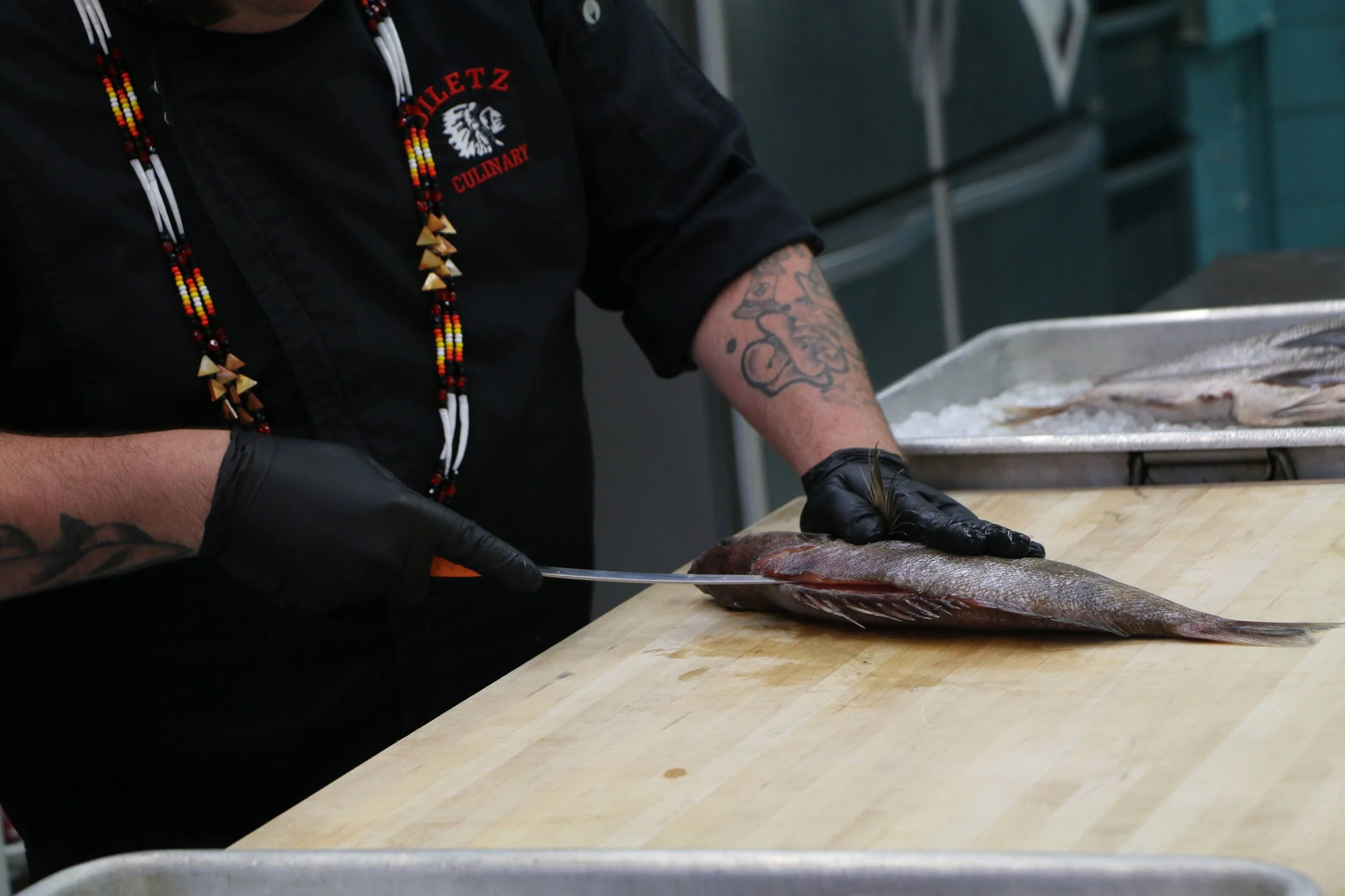
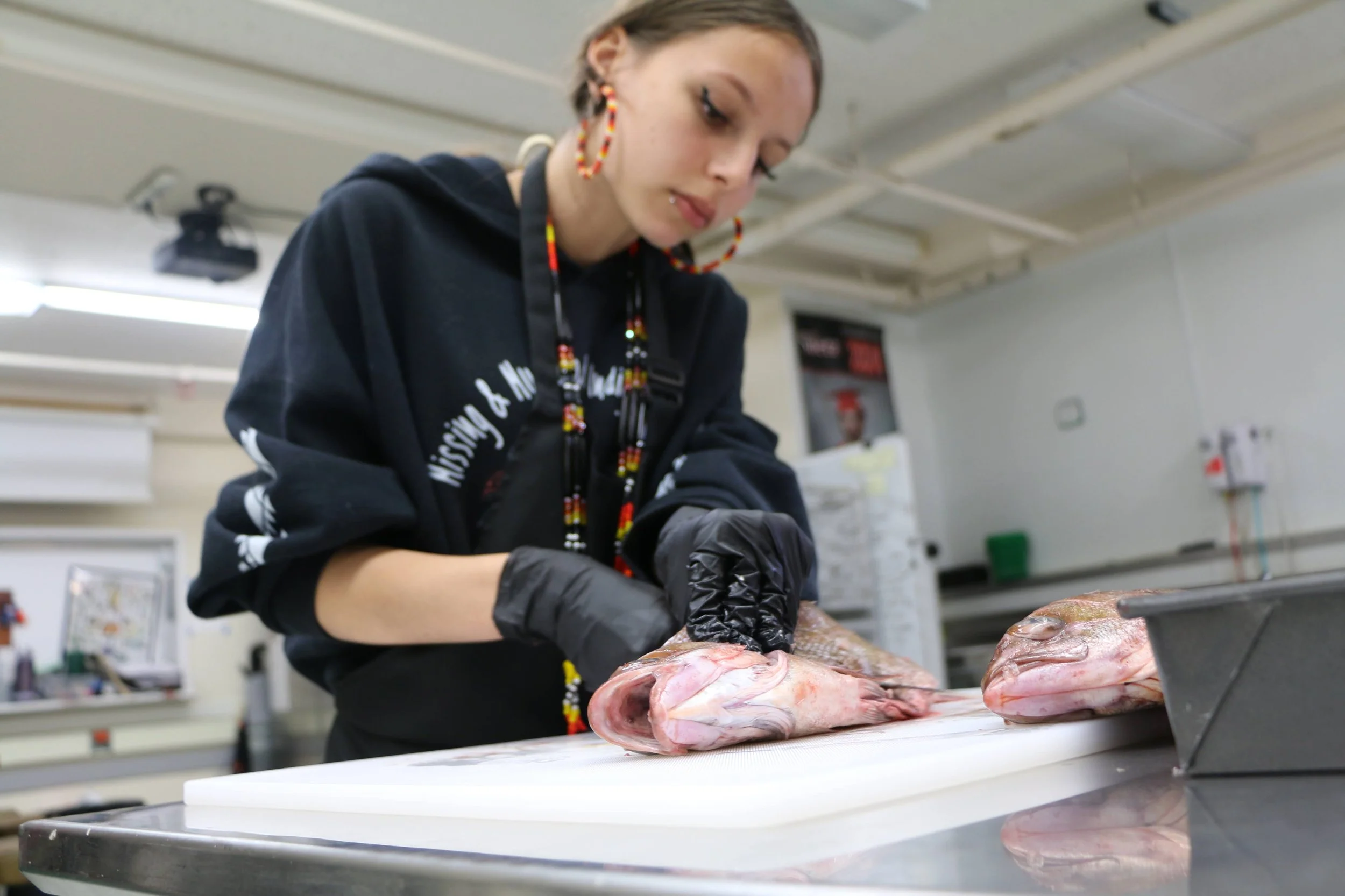
In 2026, the High School Seafood Butchery program moved into its third year of operations. To date, the program is active in 9 schools across 7 counties.
Participating students work with 12+ species of local catch, and gain the technical skills to handle, fillet, and prepare fish.
The program engages 40+ partners across Oregon’s seafood supply chain—from harvest to workforce placement – and has generated $33,786 of total investment into both seafood and logistics economies over the course of the program.
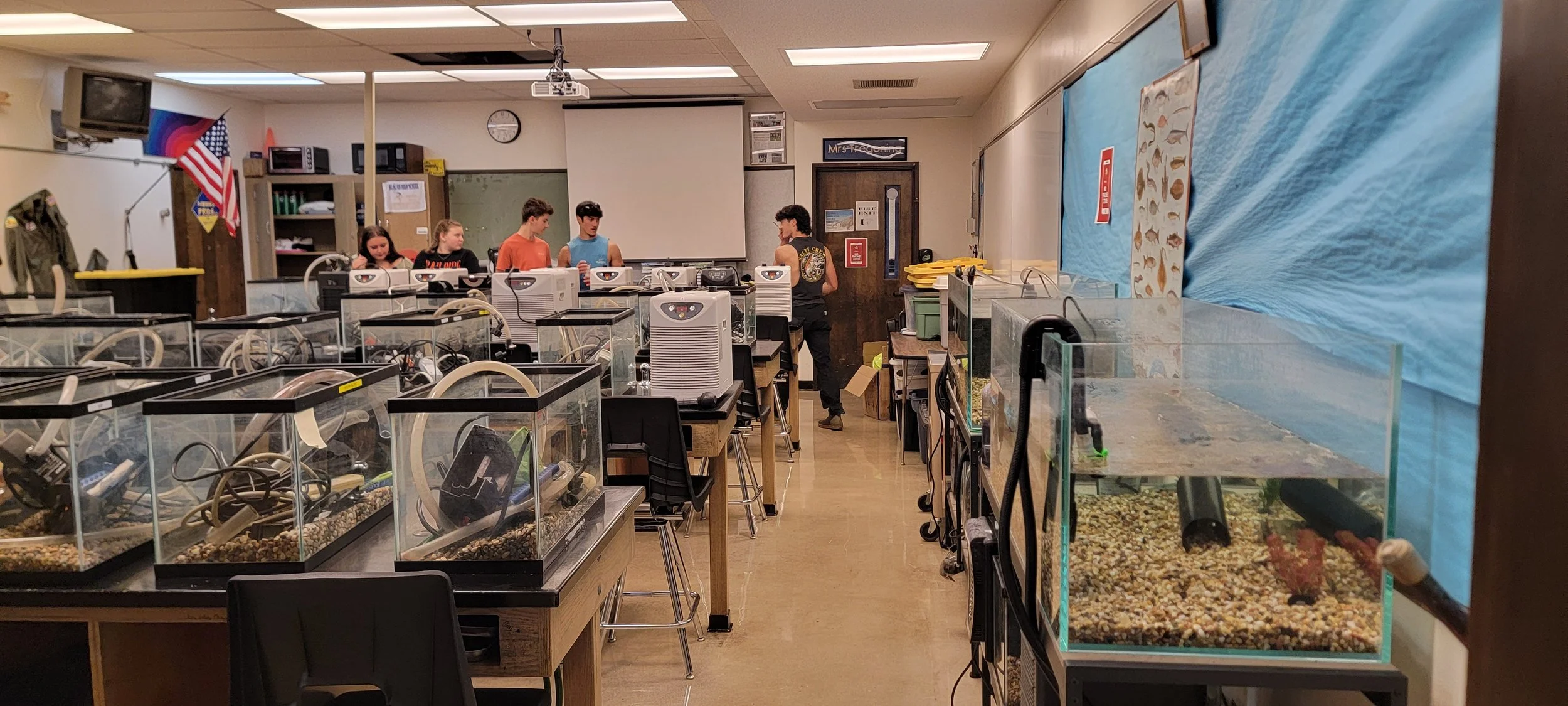
LIVE TANK TRAINING PROGRAM
The Live Tank Training Program focuses on developing standardized live seafood holding system playbooks, focusing on four key competencies: component ID, troubleshooting, water testing, and data recording, as industry-standard entry requirements for certification.
The program is working towards building a skilled workforce pipeline, increasing local institutional procurement (schools), and developing a repeatable "Playbook" for regional replication.
Workforce Synergy
The two programs dovetail into a full-chain economic model within a single school:
A science classroom manages the live system (Live Tank Training).
When the product is ready, the culinary arts program butchers/ processes the fish (Seafood Butchery).
Product enters real food systems (school meals, community use, or local markets) exemplifying a sustainable closed-loop, full-value system.
This model aligns with national momentum toward Career and Technical Education (CTE) pathways—moving students from classroom learning to workforce readiness.
Students don’t just learn within a functioning, small-scale supply chain. From live handling to final product, this model mirrors real industry conditions and builds directly transferable skills.
LEARN MORE
-
Oregon high school program teaches students about the state’s ‘blue economy’ | OPB, June 26
High schoolers turn the tide on coastal Oregon’s seafood workforce in new program | OPB, June 11
Inspiring Minds: Patrick Clarke, the Oregon ‘Small Schools’ Teacher of The Year | KLCC, May 23
Inspiring Minds: Patrick Clarke, the Oregon ‘Small Schools’ Teacher of The Year | KLCC, April 17
These students create fine cuisine from the Oregon coast resources they harvest | The Oregonian, March 11